Flooded Basement Cleanup in Falcon Heights, MN
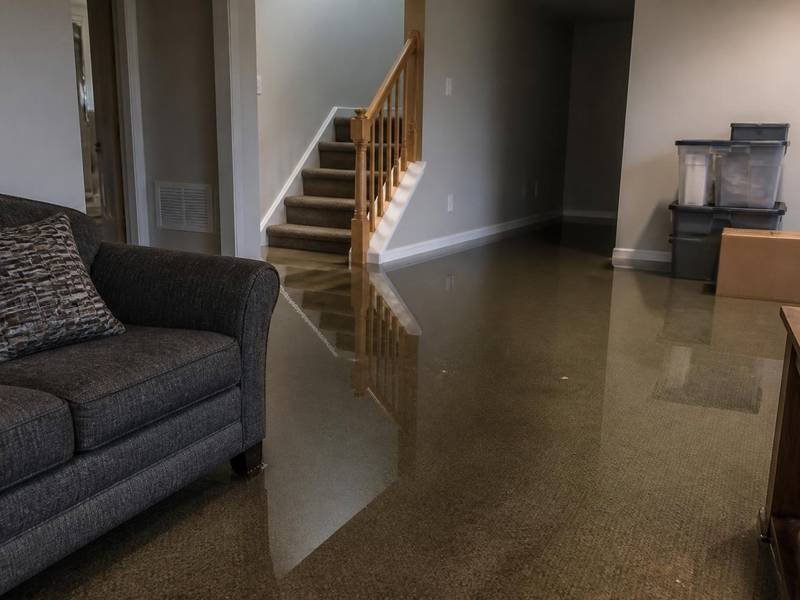
Flooded basement cleanup in Falcon Heights should begin with water removal, a moisture check, and a drying plan that accounts for flooring, drywall edges, framing, storage, and utility areas. Basement water can spread beneath finishes and along the room perimeter even after the visible water is gone.
Lower levels are different from most other rooms because several materials often meet in one confined space: concrete, carpet or resilient flooring, baseboards, finished walls, insulation, framing, mechanical equipment, and stored belongings. When water gets into that mix, the affected area can be larger than the first puddle suggests.
What should you do first when a basement floods?
If it is safe, stop the source or shut off the relevant water supply. Keep people away from standing water near outlets, extension cords, appliances, or electrical equipment. Do not enter a basement if there is an electrical or structural hazard.
Once the source is controlled, standing water should be removed so it has less time to soak into porous materials. For active water on the floor, see our emergency water removal page.
Why basement water needs a different approach
Basements often contain more moisture-sensitive layers than people realize. Carpet can hide wet pad, lower drywall can absorb water behind baseboards, and floating flooring can trap water beneath the finished surface. Utility rooms may also contain water heaters, laundry equipment, floor drains, and plumbing lines that create their own leak risks.
The cleanup plan should reflect what is actually in the basement instead of treating every lower level the same.
Common causes of flooded basements in Falcon Heights
- Water-heater failures
- Broken or frozen supply lines
- Washing-machine leaks
- Floor-drain or sewer backups
- Heavy-rain water entry
- Sump or drainage problems
- Overflowing fixtures
- Water migrating from an upper floor
Different sources call for different responses. A clean-water plumbing leak is handled differently from sewage or exterior water entry.
How is standing water removed?
The first practical step is extraction of free water. The amount of water, floor type, access, and source determine how removal is handled.
Extraction lowers the amount of water available to continue soaking into carpet pad, drywall, framing, storage, and other materials.
Why should the basement perimeter be checked?
Water often settles along wall edges, under trim, behind baseboards, and around flooring transitions. The middle of the floor can look dry while lower drywall, wall plates, or carpet pad remain wet.
That is why cleanup should include the perimeter and not just the visible center of the room.
What happens when carpet and pad get wet?
Carpet fibers may begin to dry before the pad underneath. The pad can hold significant moisture and may also transfer water to the subfloor.
Whether carpet and pad can stay depends on the source of the water, amount of saturation, condition, and ability to dry. Contaminated water changes that decision substantially.
What about laminate, vinyl, or engineered flooring?
Layered and floating flooring systems can hide water beneath the finished surface. Swelling, seam changes, or soft spots may appear later, but moisture can also remain below without obvious damage.
See our flooring and subfloor water damage page for a detailed explanation of those systems.
How does water affect drywall in a basement?
Lower drywall can absorb water upward from the floor. Baseboards may hide the damp edge, and insulation inside the wall can slow drying.
Not every wet wall has to be removed automatically. The source, saturation, insulation, contamination, and ability to dry the cavity all matter. Our wet walls and ceilings page explains those decisions in more detail.
What if the water is from a sewage backup?
Sewage and drain backups are treated differently because contamination changes what materials can remain. Porous materials may need removal, and household fans should not be used to spread air across contaminated surfaces.
Visit our sewage backup cleanup page if wastewater is involved.
How does structural drying work in a basement?
After standing water is removed, airflow and dehumidification can help affected materials release moisture. Concrete, framing, drywall, carpet, and subflooring do not all dry at the same rate.
The setup should match the materials and the amount of moisture rather than rely on a fixed number of fans or a standard number of days. See our structural drying page for more detail.
What if the basement has stored contents?
Cardboard boxes, fabric, furniture, books, and other porous belongings can absorb water quickly. Dry items should be moved out of the wet area when it is safe to do so.
Wet contents should be evaluated separately from the building materials because some items can be dried while others may not be practical to keep.
Can concrete stay wet after extraction?
Yes. Concrete is porous and can hold moisture after the visible water is gone. The surrounding wall and floor finishes are often more sensitive, but concrete may still need drying time.
That is another reason the basement should not be considered finished simply because the puddle is gone.
What if the basement flood came from a burst pipe?
Frozen or burst pipes can release water rapidly into a basement utility room or finished lower level. If the break is in a wall or ceiling, the moisture path may extend beyond the visible water.
Visit our burst and frozen pipe page for cold-weather plumbing losses.
How long does basement drying take?
There is no reliable fixed timeline. Drying time depends on the amount of water, floor system, wall construction, access, temperature, humidity, and how long the materials were wet.
The better approach is to re-check the affected materials and adjust the drying plan based on how they respond.
What should you document after a basement flood?
Take photos of the source when safe, visible standing water, affected rooms, damaged materials, and contents that were moved. Note when the loss was discovered and when the source was stopped.
If insurance is involved, coverage depends on the policy. We do not promise coverage, but clear documentation can help preserve the facts of the loss.
When should you request flooded basement cleanup?
Request help when standing water is present, the lower walls or flooring are wet, water has reached storage or utility areas, sewage may be involved, or you are not sure whether the basement is drying properly. Use the service-request form.
If water is still spreading or several materials are wet, use the Request Emergency Service form and describe what happened.
Frequently asked questions about flooded basements
Should I remove carpet immediately?
Not automatically. The source, pad condition, saturation, contamination, and subfloor all matter.
Can a basement smell damp even after the water is gone?
Yes. A persistent damp or musty odor can be a reason to check whether hidden materials are still wet.
Do all wet basement walls need demolition?
No. Some materials can dry in place, while others may need selective removal depending on the conditions.
Can water spread into another room without being visible?
Yes. Water can travel under flooring, along wall edges, and through cavities before appearing on the surface.